The Big 12 Conference made it official Sunday, announcing a $500,000 institutional fine against Kansas State after the program opted out of participating in the league’s postseason bowl pool—a decision widely seen as a major snub to the conference’s contractual obligations and traditions.
“While the Conference recognizes the challenges posed by coaching transitions, it is responsible for honoring its contractual obligations to bowl partners,” the Big 12 said in a statement. The league added that it considers the matter resolved and will provide no further comment, signaling a firm stance on ensuring member schools respect postseason commitments.
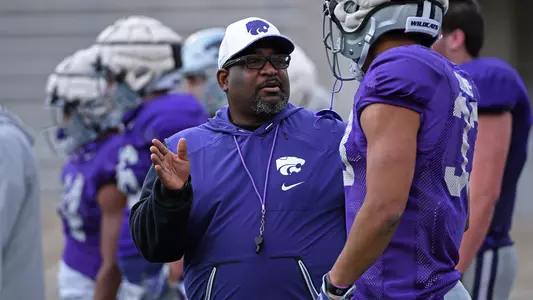
Kansas State’s decision comes on the heels of a dramatic end to the 2025 season. The Wildcats became bowl-eligible after a 24-14 victory over Colorado in their season finale. However, head coach Chris Klieman, who had led the program to six bowl appearances and the 2022 Big 12 championship, announced his sudden retirement less than a week later. Klieman finished with 54 wins over seven seasons—the most among active Big 12 coaches during that period—and extended Kansas State’s dominance in the Governor’s Cup rivalry with 17 straight victories. His departure left a leadership vacuum at a crucial moment in the season.
Collin Klein, a former Kansas State star quarterback and most recently the offensive coordinator at Texas A&M, was named Klieman’s successor. Despite his history with the program, Klein will remain with Texas A&M through the Aggies’ College Football Playoff run, leaving Kansas State with uncertainty regarding coaching leadership and roster management for a potential bowl game. Reports suggested that logistical and personnel challenges would have made fielding a competitive team difficult, further influencing the school’s decision to decline a bowl invitation—most likely the Independence Bowl in Shreveport, Louisiana.
Kansas State athletic director Gene Taylor stated that he spoke with team leaders regarding participation in a bowl, clarifying that the decision was not made via a player vote, despite some media reports to the contrary. “The choice to skip postseason play was made after careful consideration of all factors, including the coaching transition and roster availability,” Taylor said.
The fine levied by the Big 12 underscores the conference’s insistence on upholding its agreements with bowl partners, even amid program upheaval. The league has consistently emphasized the importance of honoring bowl commitments, both for contractual reasons and to maintain the integrity and reputation of the conference on the national stage. Texas Tech was the only Big 12 team to advance to the College Football Playoff this season, leaving the conference eager to fulfill other postseason obligations.
The decision has sparked debate among fans and analysts. Some argue that Kansas State’s choice was a pragmatic one, considering the abrupt coaching change and potential competitive disadvantages. Others contend that skipping a bowl game, especially after achieving eligibility, shows a lack of respect for the league and the traditions of college football. The Big 12’s $500,000 fine sends a clear message that even extraordinary circumstances will not excuse schools from honoring postseason commitments.
As college football fans digest this news, attention now turns to the broader implications for the Wildcats’ program and the Big 12. Will the conference tighten its rules around bowl participation? How will Kansas State rebuild under Klein’s leadership while navigating postseason criticism and fines? These questions loom large as the program enters a new era following Klieman’s departure.
The full bowl schedule will continue to be announced as participants and matchups are confirmed, and the Wildcats’ absence is sure to leave a noticeable gap in the postseason lineup. Meanwhile, the Big 12 continues to assert its authority and maintain order, emphasizing that member schools must respect both contractual and competitive commitments, regardless of internal challenges.