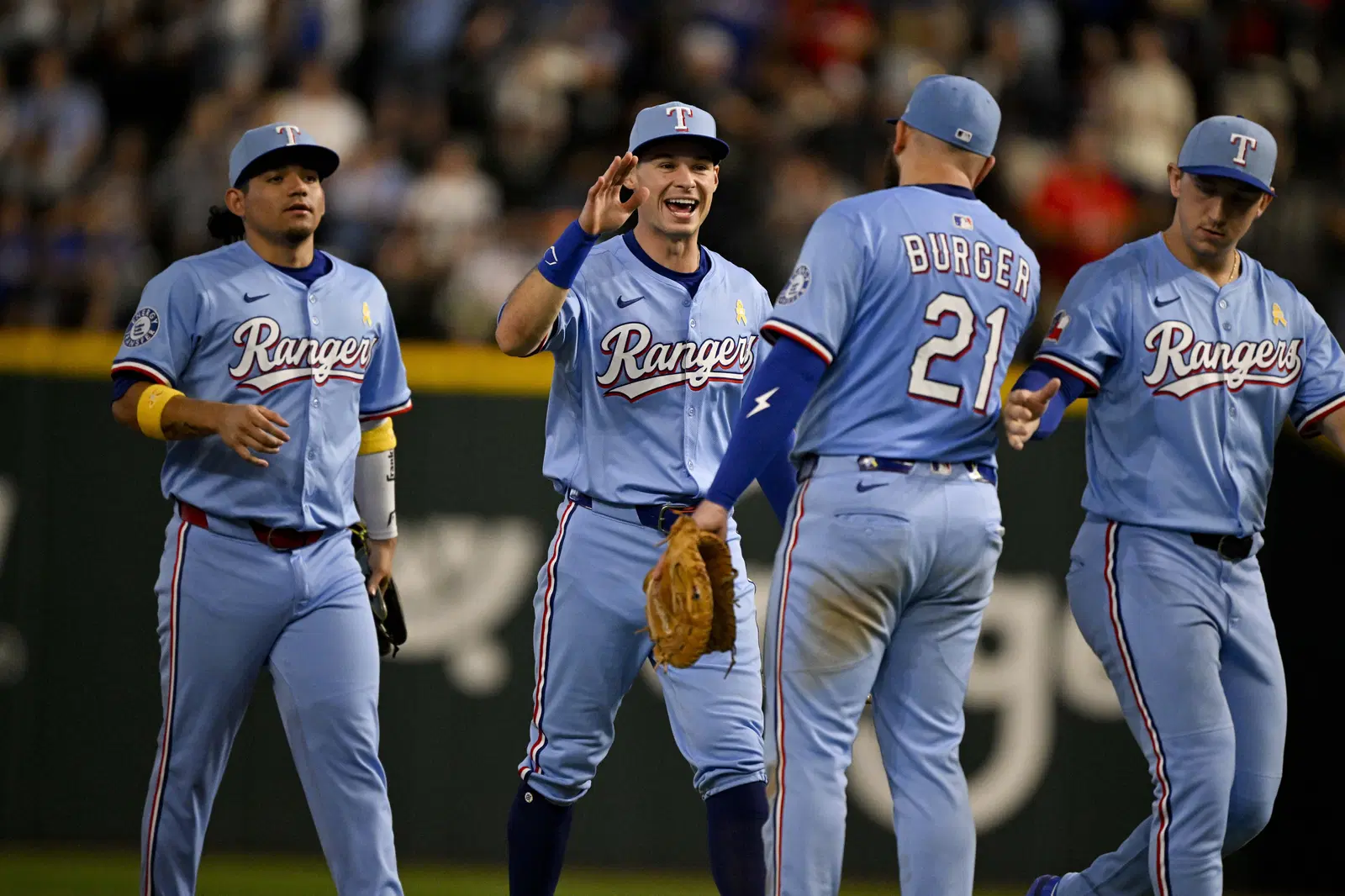
The Texas Rangers are looking to evolve their offense as they prepare for the 2026 season, moving away from a reliance on home-run power that has masked inconsistencies in recent years. After winning the 2023 World Series, Texas leaned heavily on long balls, hoping they would cover lineup weaknesses, injuries, and depth issues. That approach has proven unsustainable.
Last season exposed the team’s struggles, as the Rangers finished with a .234 batting average, near the bottom of Major League Baseball. Scoring droughts became frequent, and when home runs failed to come, the offense often disappeared entirely. Analysts say that type of volatility cannot hold up over a full season, especially in a division filled with contact-oriented lineups.
Hitting coach Justin Viele and bench coach Skip Schumaker are leading a shift toward a more balanced offensive approach. The plan emphasizes on-base ability, situational hitting, and lineup depth, with the goal of raising the team batting average closer to .250. Such improvement would reduce empty innings and create consistent scoring opportunities without relying solely on home runs.
Key players like Wyatt Langford and Evan Carter are central to the transformation. Langford’s power remains a weapon, but his growth as a complete hitter will determine whether the offense stabilizes. Carter brings speed, discipline, and disruptive baserunning, while veterans such as Corey Seager are expected to contribute through doubles and getting on base rather than chasing another 30-homer season. Young players like Alejandro Osuna and Cody Freeman are also expected to help extend at-bats and move runners, providing a longer, more dynamic lineup.
The Rangers are clear that power will remain part of the offense, but it must complement, not replace, consistent run production. If Texas successfully balances home-run power with situational hitting in 2026, the offense could once again support a playoff-caliber team, moving past the reliance on one swing to carry the season.