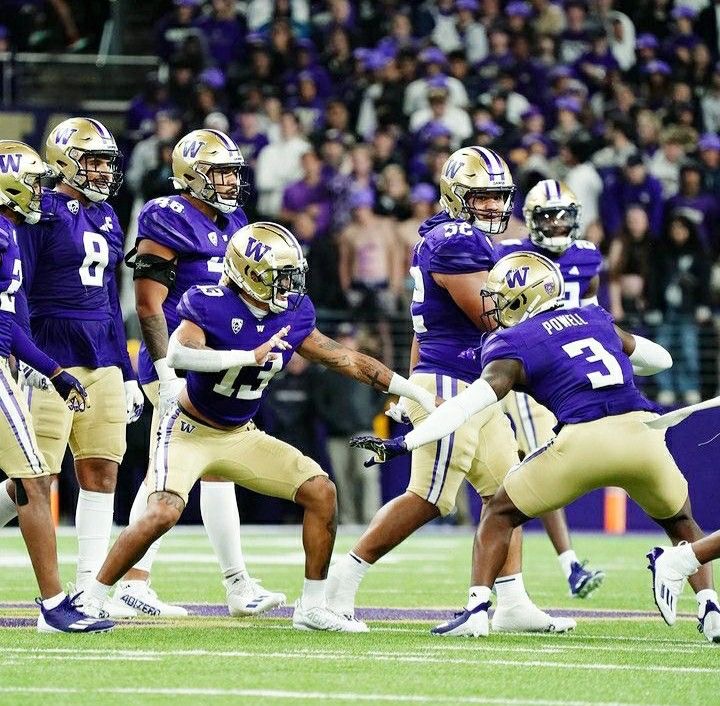
In a shocking move on February 21, 2026, quarterback Demond Williams Jr.officially announced his transfer from the Washington Huskies to a top-tier rival program, sending ripples through the college football world. Known for his dual-threat capabilities and leadership on the field, Williams had been a cornerstone of the Huskies’ offense, making this unexpected shift one of the biggest headlines of the season.
Reports confirm that Williams has committed to a major Pac-12 rival, immediately boosting their prospects for the upcoming season. Coaches and analysts described the acquisition as “game-changing,” emphasizing that landing a quarterback of Williams’ caliber could dramatically alter the balance of power within the conference.

The Huskies’ athletic department expressed disappointment in Williams’ decision, noting that he had been a central figure in their plans for 2026. Fans and commentators alike reacted with disbelief, taking to social media to voice both frustration and admiration for his bold career move. This development also raises questions about player retention amid the growing transfer portal era.
Williams’ transfer reportedly involves negotiations over his previous NIL and revenue-sharing agreements with Washington. Experts suggest that the deal with his new school could eclipse previous arrangements, highlighting the increasingly high stakes of college football transfers and the influence of Name, Image, and Likeness contracts on player decisions.

With the season fast approaching, all eyes will be on Williams as he integrates into his new program. Analysts predict an immediate impact on the team’s offensive scheme, while Huskies fans brace for a season without their star quarterback. This transfer is poised to be one of the defining stories of the 2026 college football landscape, illustrating the rapid evolution of the sport in the era of high-profile player mobility.