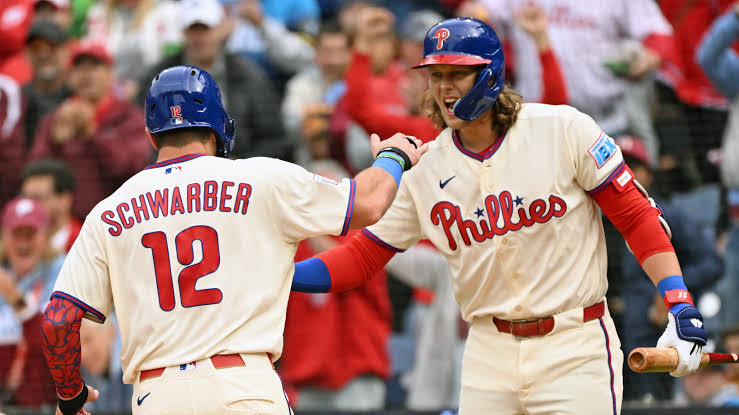
The Philadelphia Phillies could face an uncomfortable offseason development as the New York Mets consider a potential reunion with a veteran left-handed reliever whose recent performances have created a surprising turn in the National League East rivalry. After acquiring Brooks Raley from the Mets during the 2026 season, Philadelphia struggled to get the results it anticipated from the experienced bullpen arm. Now approaching free agency, Raley could become a candidate for a return to Queens, potentially giving New York an opportunity to strengthen its relief corps while adding another layer to an already intense divisional rivalry. Although no reunion has been finalized, the possibility presents an intriguing storyline as both organizations evaluate their rosters and prepare for the 2027 campaign. For Philadelphia, the situation raises questions about whether the club should reconsider its relationship with the veteran or allow him to pursue another opportunity elsewhere.
Raley’s departure from New York in August came after an impressive stretch in which he established himself as one of the Mets’ more dependable relief pitchers. The 38-year-old left-hander recorded a 1.96 ERA and a 3.10 FIP across 45 appearances before the trade, demonstrating an ability to handle important situations despite the team’s disappointing season. His consistency made him a valuable option for the Mets’ coaching staff, and his effectiveness against both left-handed and right-handed hitters increased his versatility. Left-handed batters hit just .186 against him, while right-handed hitters managed a .216 batting average. Those numbers highlighted why Raley was trusted in situations that demanded more than a conventional matchup specialist. His experience, control and ability to limit damage made him an important bullpen piece, leaving New York with a potentially compelling reason to consider bringing him back if the financial terms are favorable.
Philadelphia acquired Raley in exchange for prospects Luke Gabrysh and John Spikerman, hoping that his experience and previous production would strengthen the bullpen during the final stretch of the season. However, the move did not produce the desired results. Raley struggled to find consistency after arriving in Philadelphia, finishing his brief stint with a 7.94 ERA over 11⅓ innings. His difficulties became especially costly as the Phillies attempted to position themselves for postseason success. The left-hander ultimately did not make the team’s Wild Card Round roster, underscoring how dramatically his role had changed in a relatively short period. Although the sample size was limited, his struggles contrasted sharply with the numbers he produced in New York. Philadelphia now faces an offseason decision involving a pitcher who looked like a reliable high-leverage option before the trade but became a less dependable choice after changing uniforms.
For the Mets, the possibility of bringing Raley back could make baseball sense beyond the obvious rivalry implications. New York needs to assess its bullpen carefully after an inconsistent 2026 campaign, and dependable relief pitching remains an important component of any effort to return to contention. The team received encouraging performances from several arms late in the season, including Nate Lavender, who posted a 1.66 ERA and a 1.85 FIP, and Daniel Duarte, who recorded a 2.65 ERA from the trade deadline onward. Kodai Senga also showed flashes of usefulness in a late-inning role. Those developments could give the Mets a foundation for the upcoming season, but relying exclusively on emerging options would introduce uncertainty. Reuniting with Raley would offer a familiar alternative with a track record of success in New York, potentially giving the coaching staff another experienced left-hander to deploy in important situations.
The financial side of the potential reunion could also work in the Mets’ favor. Raley’s disappointing finish with Philadelphia may affect his value on the open market, potentially making him more affordable than he would have been following his earlier success. A short-term agreement could allow New York to address its bullpen needs without committing substantial resources to a reliever whose age and recent struggles warrant careful consideration. The $172 million figure in the headline should not be interpreted as Raley’s contract value; the available report does not establish that he is a $172 million player or that such a deal is being discussed. Any potential agreement would instead depend on his market, the Mets’ budget and the team’s assessment of his future performance. For Philadelphia, the prospect of seeing a former bullpen contributor return to its division rival could be frustrating, particularly if Raley rediscovers the effectiveness he displayed before the trade.

Ultimately, the potential reunion remains a possibility rather than a confirmed transaction, and the Mets must decide whether Raley represents the right fit for their 2027 plans. His earlier success in Queens provides a persuasive argument for another opportunity, but his late-season struggles, advancing age and durability must also factor into the decision. Philadelphia, meanwhile, will need to determine whether it wants to pursue other bullpen options or consider a return under different circumstances. The Phillies cannot afford to let rivalry concerns dictate their offseason strategy, just as the Mets should not sign a player merely to frustrate a division opponent. Still, a reunion would carry consequences beyond the transaction itself: New York could gain a familiar relief option, while Philadelphia could watch a pitcher it acquired struggle in its uniform before potentially returning to form elsewhere. As the offseason unfolds, Raley’s next destination could become an intriguing subplot in the continuing battle between two clubs seeking a stronger position in the National League East.