The most interesting part of the clip comes midway through, when Felger outlines the key reasons his insider source believes a major blockbuster trade could realistically happen. Each point carries enough weight to stand on its own:
- The Red Sox view Trout as a stronger leader than Bregman
- He would thrive at Fenway Park with increased home run potential
- The Angels are interested in Jarren Duran and Brayan Bello
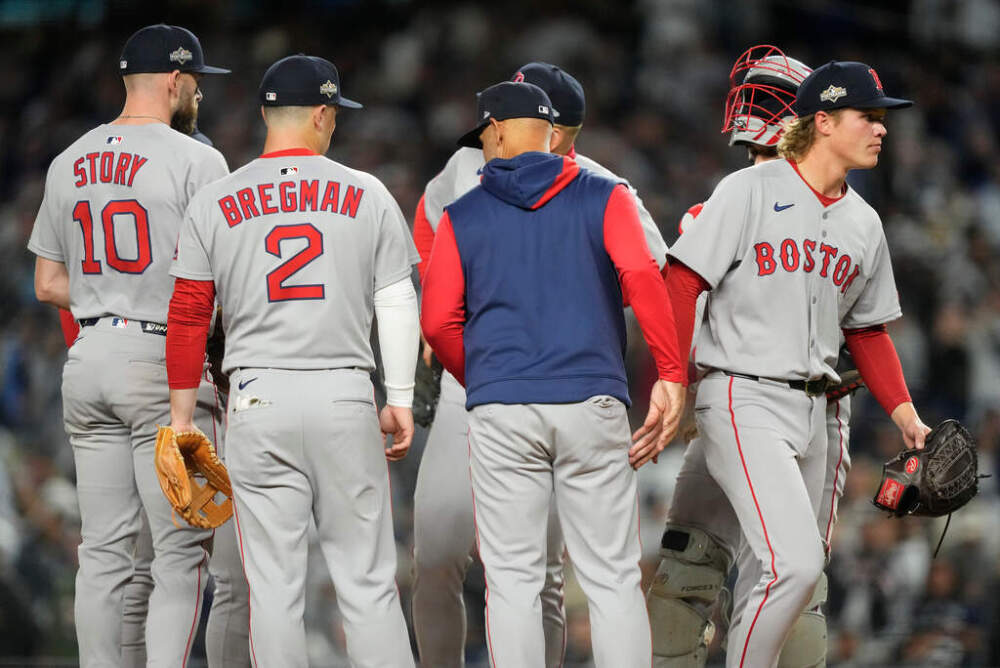
The first point in particular hints at deeper internal tension within the Red Sox organization, suggesting a possible divide between Alex Cora’s influence and Craig Breslow’s front-office direction. If Cora was behind the push for Bregman, then the comparison between Bregman and Trout as leaders may reflect lingering disagreements inside the club.

Felger’s source repeating that detail implies it was intentionally emphasized by someone close to the situation—possibly indicating frustration within one faction of the organization over past decisions, including the controversial last-minute pivot from Nolan Arenado to Alex Bregman in 2025.
However, the most important detail is the third point, which ties directly to finances. If the Angels are truly open to moving Trout, a deal becomes more realistic if players like Duran and Bello are included, since they carry manageable long-term value. That matters because Trout’s contract is massive—about $37.1 million annually through 2030, leaving roughly $175 million remaining as of mid-2026.

His recent availability history also raises concerns:
- 2021: 36 games
- 2022: 119 games
- 2023: 82 games
- 2024: 29 games
- 2025: 130 games
This inconsistent durability means any acquiring team would likely require the Angels to absorb a significant portion of his salary, which could be a key motivator for Anaheim given their poor record and slim playoff odds.
On the Red Sox side, Masataka Yoshida’s contract also plays a role, as moving him could help balance the financial structure of a deal. His presence could offset some of Trout’s remaining salary, making a complex three-team-style financial arrangement more feasible.
This type of salary balancing isn’t new—similar mechanics were used in the 2015 Troy Tulowitzki trade, where the Blue Jays absorbed a star contract while the Rockies took back unwanted salary to make the deal work.
When the numbers are broken down, adding Duran, Bello, and Yoshida into the equation brings the financial gap much closer than expected, especially through the next few seasons. While nothing is confirmed, the structure suggests the rumor may not be entirely baseless.
Still, there are major obstacles, including Trout’s no-trade clause, the final years of his contract, and the complexity of aligning multiple front-office priorities. Any real deal would take extensive negotiations.
On the baseball side, however, the fit is undeniably appealing. Trout’s power would play extremely well at Fenway Park, and his career home run pace since 2020 suggests elite production if healthy. He would also immediately resolve roster logjams in the Red Sox outfield and DH mix, creating a more balanced and controllable lineup core.
From a lineup and marketing standpoint, pairing Trout with young stars like Roman Anthony and others would significantly boost both competitiveness and fan engagement. There is also the broader narrative appeal of potentially placing Trout in a high-pressure contender role late in his career, similar to how veterans like Nolan Arenado have seen renewed production after changing teams.
Finally, the rivalry element—especially the idea of Trout and Aaron Judge both playing in the same division—adds another layer of intrigue, intensifying one of baseball’s biggest storylines.
Overall, the concept of a Trout trade blends financial logic, roster need, and narrative appeal, even if the real-world hurdles remain substantial.