The New York Yankees have once again seen their postseason hopes collapse, with offensive struggles exposing significant weaknesses on the roster. With a relatively underwhelming free-agent market expected this offseason, the organization may have to explore unconventional ways to improve the team.

That could mean pursuing blockbuster trades capable of changing the direction of the franchise rather than relying entirely on free-agent signings. Although the Yankees could choose to bring back much of their current roster, a more aggressive approach would give them an opportunity to address their biggest shortcomings.
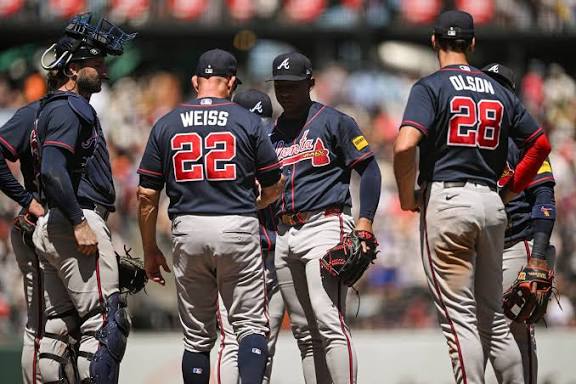
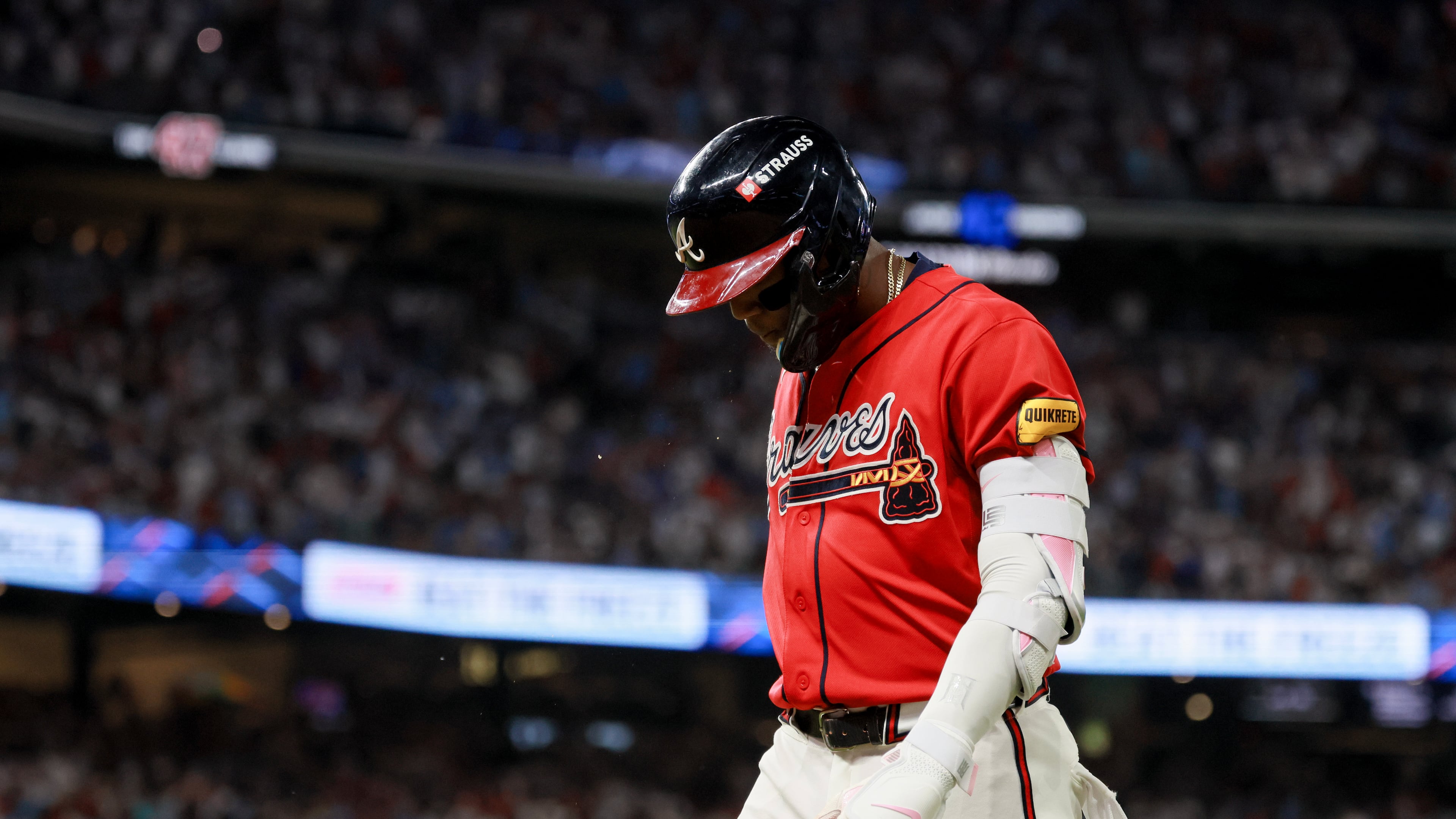
One particularly intriguing possibility involves Atlanta Braves superstar Ronald Acuña Jr., whose uncertain situation following a disappointing postseason has created speculation about his long-term future in Atlanta.
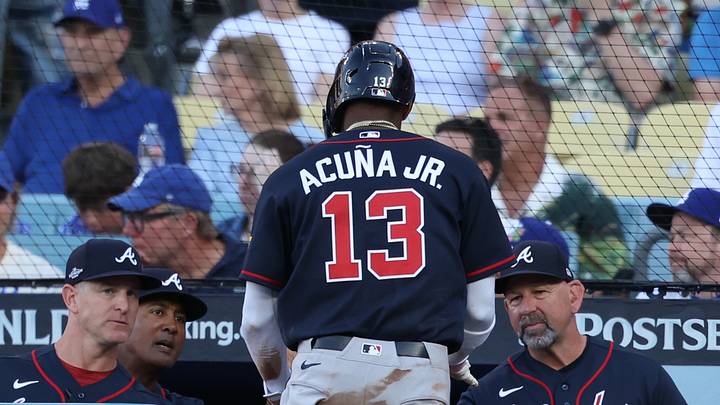
Acuña endured a postseason performance that fell well below expectations, failing to record a home run or drive in a run across two rounds of playoff action. He hit just .111 against the Philadelphia Phillies and .133 against the Los Angeles Dodgers, struggling to make consistent contact against high-velocity pitching.
For a player widely regarded as one of baseball’s most dangerous offensive talents, those numbers were particularly disappointing. His postseason struggles also came alongside several unusual developments away from the field.
Acuña wiped his Instagram account near the end of Atlanta’s season and faced criticism from portions of the home crowd after announcing a sponsorship with Kalshi. Although the circumstances surrounding those moments do not automatically indicate a problem between the player and the organization, they have added another layer of intrigue to an offseason that could bring significant decisions for the Braves.
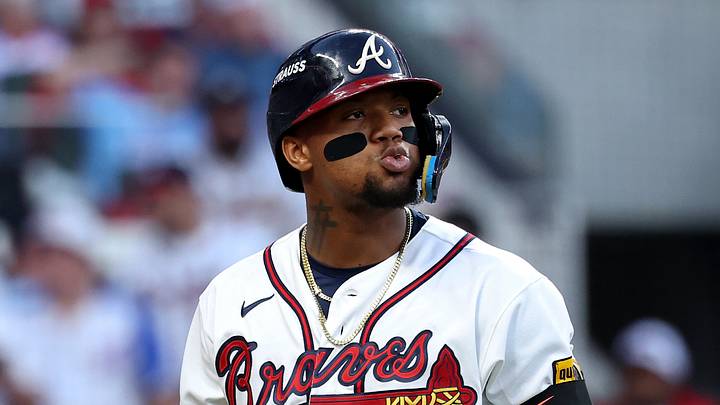
Despite the disappointing finish, trading Acuña would represent a major decision for Atlanta. The superstar remains one of the most recognizable players in baseball, and his contract structure gives the Braves team options for the 2027 and 2028 seasons.
However, his latest performance has raised questions about whether the organization should continue building around him or consider the possibility of moving him while his reputation and market value remain substantial. Acuña finished the regular season with a 118 OPS+, a notable decline from the 161 mark he recorded in 2025.
He still delivered flashes of his extraordinary ability, including impressive displays of power during the regular season, but his overall production did not consistently match the expectations attached to his status.
Atlanta would have to weigh his immense upside against his recent inconsistency before considering such a move. Even so, the possibility of a trade is an intriguing scenario, particularly if the Braves believe a substantial return could strengthen several areas of their roster.
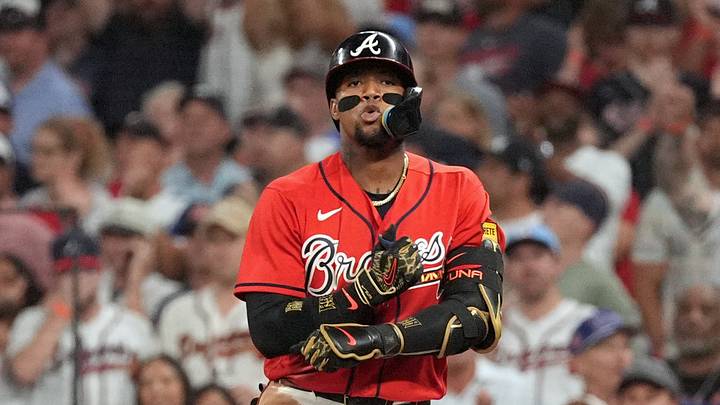
For the Yankees, acquiring Acuña would represent an opportunity to add another superstar alongside Aaron Judge and potentially reshape their outfield. New York has previously experienced the benefits of pairing Judge with another elite offensive player, most notably Juan Soto during the 2024 season when the Yankees advanced to the World Series.
Bringing in Acuña could give the franchise another dangerous bat capable of changing games with one swing. However, completing a deal of this magnitude would require significant financial and roster considerations, especially with uncertainty surrounding the offseason calendar and the possibility of a prolonged labor dispute.
Acuña’s personality and adjustment to a new clubhouse would also become talking points, although those considerations would be secondary to his on-field talent. If the Braves became willing to entertain offers, the Yankees would need to determine whether his potential production justified sacrificing several valuable young players.
A potential trade package would likely begin with outfield prospect Spencer Jones, whose combination of power and athleticism could appeal to Atlanta. Jones would give the Braves a young player with considerable upside while potentially creating an opportunity for him to develop into a regular contributor at the major-league level.
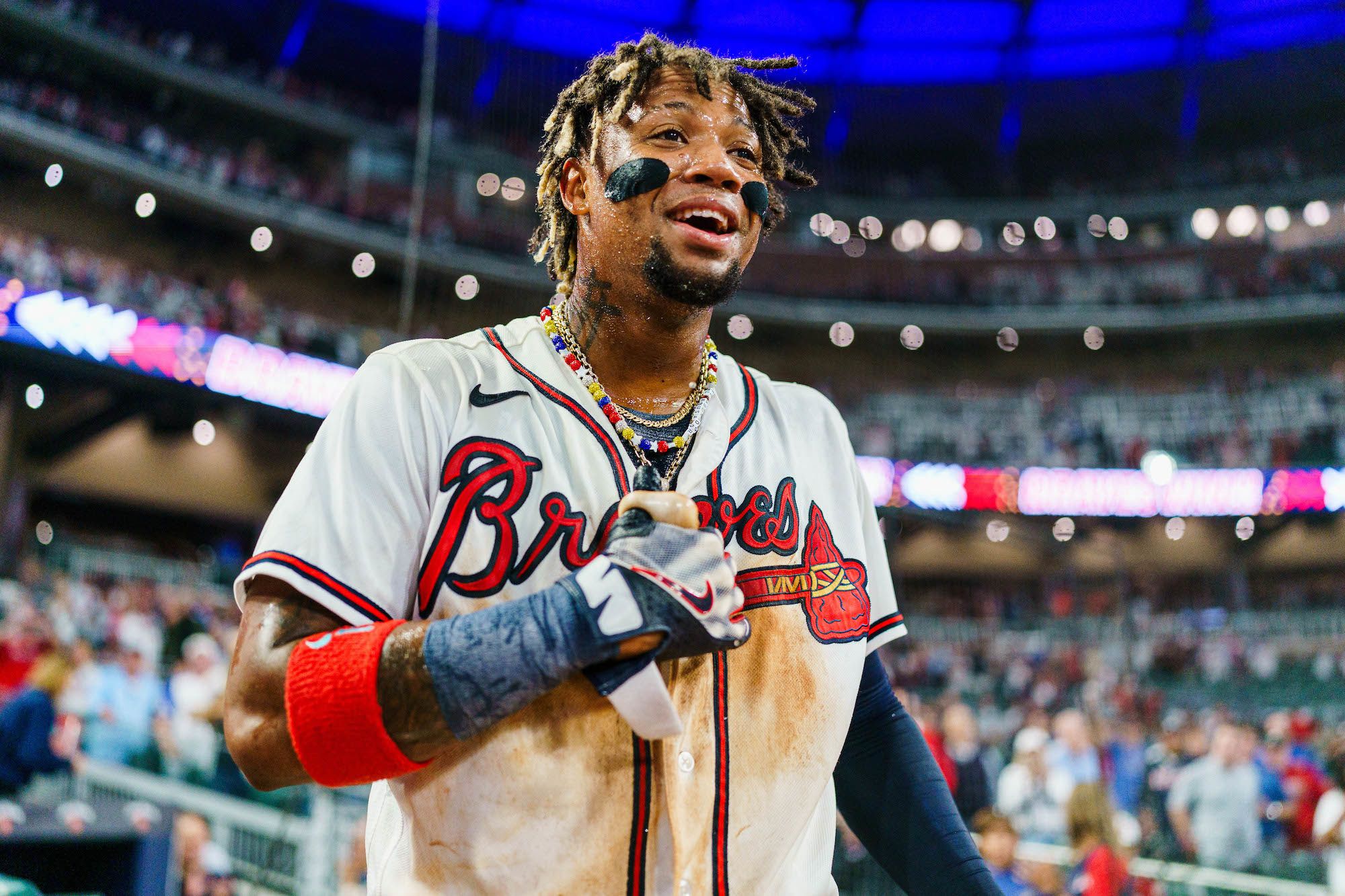
From New York’s perspective, acquiring Acuña could allow the team to rearrange its outfield alignment, with Cody Bellinger potentially moving to center field and Acuña taking over in left. Playing left field at Yankee Stadium presents its own challenges, but his offensive potential would make the defensive adjustment worth considering.
The Braves would likely demand additional prospects to compensate for surrendering a player of Acuña’s caliber. Young talents such as Yostin Peña or Wilberson de Peña could become part of the discussion, depending on how the Yankees value their development and long-term potential. Adding a pitching prospect such as Ben Hess could further strengthen the proposal and give Atlanta a broader collection of assets to work with.
Nevertheless, there is a substantial difference between imagining a blockbuster trade and actually completing one. The Braves would have to decide whether moving Acuña makes sense for their immediate competitiveness and long-term plans, while the Yankees would need to determine how much of their farm system they are willing to sacrifice.
New York could ultimately decide that retaining its existing outfield options, including Trent Grisham, represents a more sensible approach than surrendering several promising prospects for a player coming off a difficult postseason.

Much will depend on Atlanta’s evaluation of Acuña’s future, the availability of alternative targets and the direction of the offseason once the league’s labor situation becomes clearer.
For now, a Yankees-Braves blockbuster remains a speculative possibility rather than a confirmed negotiation. Still, if New York decides that another superstar is necessary to return to championship contention, Acuña could emerge as one of the most fascinating names to monitor.