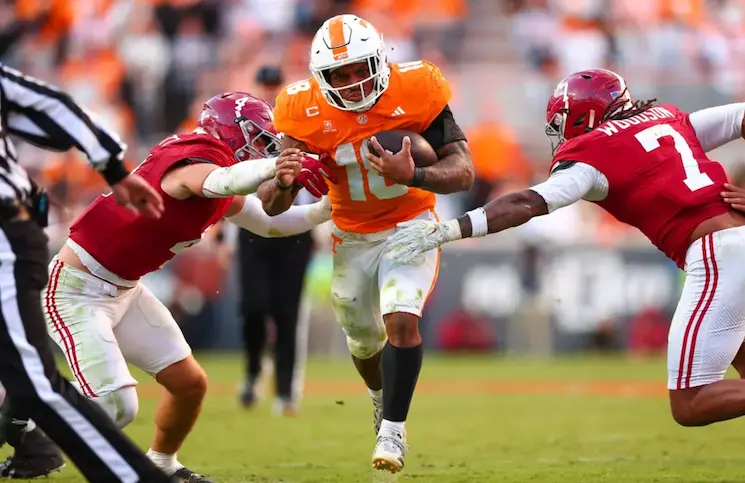
The Tennessee Volunteers have suffered a significant setback on the recruiting trail after one of their highly regarded defensive commitments decided to change course and pledge his future to a major Southeastern Conference rival. Head coach Josh Heupel and defensive line coach Rodney Garner had been working to keep the talented prospect in Tennessee’s 2027 recruiting class, but their efforts ultimately fell short as Georgia emerged with his commitment. Four-star defensive lineman Christian Mays, widely regarded as one of the most promising junior college prospects in the country, announced that he was decommitting from Tennessee and committing to Georgia on October 19. The decision delivered an unwelcome development for the Volunteers, particularly after the program had enjoyed an emotional victory over Alabama at Neyland Stadium. Tennessee’s recruiting momentum had received a lift from that result, but losing a defensive prospect of Mays’ caliber quickly shifted attention back to the challenges facing the coaching staff. With competition for elite defensive talent intensifying across the SEC, the departure represents a reminder that commitments are not always secure until prospects make their final decisions.

Mays had been committed to Tennessee since June 6, giving the Volunteers several months to build their relationship with the defensive lineman and incorporate him into their plans for the future. However, other programs continued pursuing him, and his recruitment became increasingly competitive as Georgia and Texas worked to convince him to reconsider his original decision. The opportunity to visit Georgia in Athens ultimately proved important, with Mays choosing the Bulldogs after spending time with the program. In announcing his decision, he expressed appreciation for Tennessee’s recruiting efforts and explained that, after considerable thought, prayer and conversations with his family, he had decided to decommit and commit to Georgia. His statement reflected the personal nature of the recruiting process, in which players must weigh their options and determine which school best fits their ambitions. For Tennessee, the timing was particularly difficult because the program had been coming off a victory that strengthened its position in the eyes of its supporters. Nevertheless, recruiting decisions operate independently of individual game results, and Mays ultimately chose the opportunity he believed was right for him.
The loss carries additional significance because of Mays’ physical profile and standing among junior college prospects. The 6-foot-5, 340-pound defensive lineman is ranked as a four-star recruit by the 247Sports Composite, which places him among the leading defensive linemen in the country and identifies him as the No. 3 junior college prospect nationally in the 2027 class. His size and experience made him an appealing addition for a Tennessee program looking to strengthen its defensive front. Junior college prospects can provide a different kind of recruiting opportunity because they often arrive with additional experience against older competition and may be closer to contributing at the college level than traditional high school recruits. Although the speed of that transition depends on the player and the program, Mays had been viewed as a potentially important piece of Tennessee’s future defensive plans. Losing his commitment means the Volunteers must reassess their options and continue pursuing players who can help address their needs along the defensive line. Georgia, meanwhile, adds another highly regarded prospect to its recruiting efforts under head coach Kirby Smart, further intensifying the competition between two programs that regularly pursue many of the same players.

With Mays now committed to Georgia, attention turns toward Tennessee’s remaining defensive recruiting targets and how the coaching staff intends to respond. One name that has gained additional importance is Hayden Lowe, a former five-star pass-rushing prospect who is now playing at Long Beach City College. Lowe has attracted interest from Tennessee, Alabama, UCLA, California, Missouri and other programs, creating another competitive recruitment for the Volunteers to navigate. The 6-foot-5, 255-pound defender has the physical dimensions that make him an intriguing option for teams seeking help on the edge, although his recruitment remains a separate process with its own considerations. Tennessee’s pursuit of Lowe has become particularly relevant as the staff evaluates its future pass-rushing options and works to strengthen the defensive front. The Volunteers will need to demonstrate that their development plans, defensive scheme and opportunities for playing time align with what Lowe wants from his next destination. An upcoming visit to Alabama, as reported in the original coverage, also means Tennessee faces competition from a familiar SEC opponent. The loss of Mays does not automatically determine the outcome of Lowe’s recruitment, but it does increase the importance of identifying and securing other talented defensive prospects.

The broader challenge for Heupel and his staff is maintaining recruiting stability while competing against programs with similar ambitions and substantial resources. Tennessee has made significant efforts to improve its roster, but recruiting battles can change quickly when prospects take additional visits or reconsider their options. Georgia’s success in securing Mays illustrates how quickly a commitment can shift when another program makes a compelling impression. Texas had also pursued the defensive lineman, demonstrating the level of interest surrounding a prospect with his ranking and physical attributes. Tennessee must now determine whether it can replace the type of contribution Mays might have provided through other recruits, junior college options or future roster additions. That process will require continued evaluation rather than an immediate assumption that one player can fill every need. Defensive line depth is particularly important in the SEC, where teams regularly face powerful offensive lines and offenses capable of sustaining long drives. Building a reliable rotation requires multiple players who can contribute, making every recruiting decision meaningful as programs prepare for upcoming seasons.

Ultimately, Mays’ decision marks a disappointing development for Tennessee’s 2027 recruiting efforts, but it does not define the entire class or eliminate the Volunteers’ ability to improve their defensive front. Georgia has secured the commitment of a highly rated junior college defender, while Tennessee must redirect its attention toward the prospects who remain available. The Volunteers will have opportunities to strengthen their recruiting position through continued visits, evaluations and conversations with their remaining targets. Lowe’s recruitment is one situation to monitor, but the coaching staff will likely need several options to ensure the defensive line receives the necessary attention. For supporters, the most frustrating part of the development is that the change came shortly after a memorable victory over Alabama, a result that had provided plenty of reasons for optimism. Recruiting, however, is a long process that extends beyond a single weekend or game. Tennessee must now respond by pursuing its remaining targets and continuing to build a class capable of meeting its future needs. Mays’ commitment to Georgia is a clear recruiting setback, but the Volunteers’ next moves will help determine how significantly the decision affects their longer-term plans.


